
When spring rain starts soaking the ground and warm air melts leftover frost, all that moisture has to go somewhere. Too often, that place ends up being someone’s basement. This is the time of year when water shows up in all the wrong places, and it’s why a lot of people start thinking about basement waterproofing. If you’ve noticed damp walls, a musty smell, or water pooling on the floor after a storm, chances are your home is trying to tell you something. Before summer storms roll in, it helps to know what to expect if you decide it’s time to fix the problem. Sometimes those signs seem like a small irritation, but with weather turning fast in our area, small issues can grow quickly if they aren’t taken seriously.
Your basement is meant to be a dry, safe space, whether it’s where you do laundry, store boxes, or have a finished living area. But even a tiny bit of water coming in can lead to bigger trouble. Water doesn’t just go away, it seeps deep into cracks or finds its way behind walls, causing wood to swell, paint to bubble, and, over time, mold to take hold. Knowing the warning signs and what the waterproofing process involves can save you money and peace of mind as the seasons change.
Signs It’s Time to Waterproof Your Basement
A basement usually shows warning signs before water becomes a bigger issue. Knowing what to look for early can save a lot of trouble down the road. You only have to pay a little attention to spot hints that moisture is sneaking in, even if you can’t see water right away.
- Musty smells are often a clue that moisture is gathering somewhere, even if you can’t see it
- Mold on the walls, in corners, or behind stored items is another sign that moisture is sneaking in
- Pools of water that appear after spring storms or snowmelt often point to poor drainage outside
- Cracks in your foundation or basement walls give water a direct path indoors
Don’t ignore those things if you notice them. Damp odors or that soft, spongy feeling on walls or floor corners are little hints that water keeps finding its way in. Tiny spores from mold or mildewy patches can pose health risks, especially for people with allergies or asthma. These are the kinds of problems that rarely fix themselves. Mold and mildew only get worse over time and can make a basement space feel cold and unwelcoming.
If you’re seeing a mix of these clues, now is a good time to plan ahead before summer weather makes it worse. Waiting until water starts to pool up or stains climb higher up the wall means you might need bigger repairs. By paying attention early on, you can help keep your basement clean, dry, and safe, even as the weather shifts each week.
What a Basement Waterproofing Service Looks Like
If you’ve never had this type of work done before, it can feel a little unclear what the process involves. But it’s usually pretty straightforward. Getting ready for a waterproofing service isn’t as complicated as you may think, but there are a few steps that need to happen to make sure the job is done right.
- Everything starts with a full inspection inside and outside the basement
- We look for cracks, staining, water paths, and check if the grading around the home is sloping the wrong way
- Gutters and downspouts also get a look, since they play a big part in getting water away from the house
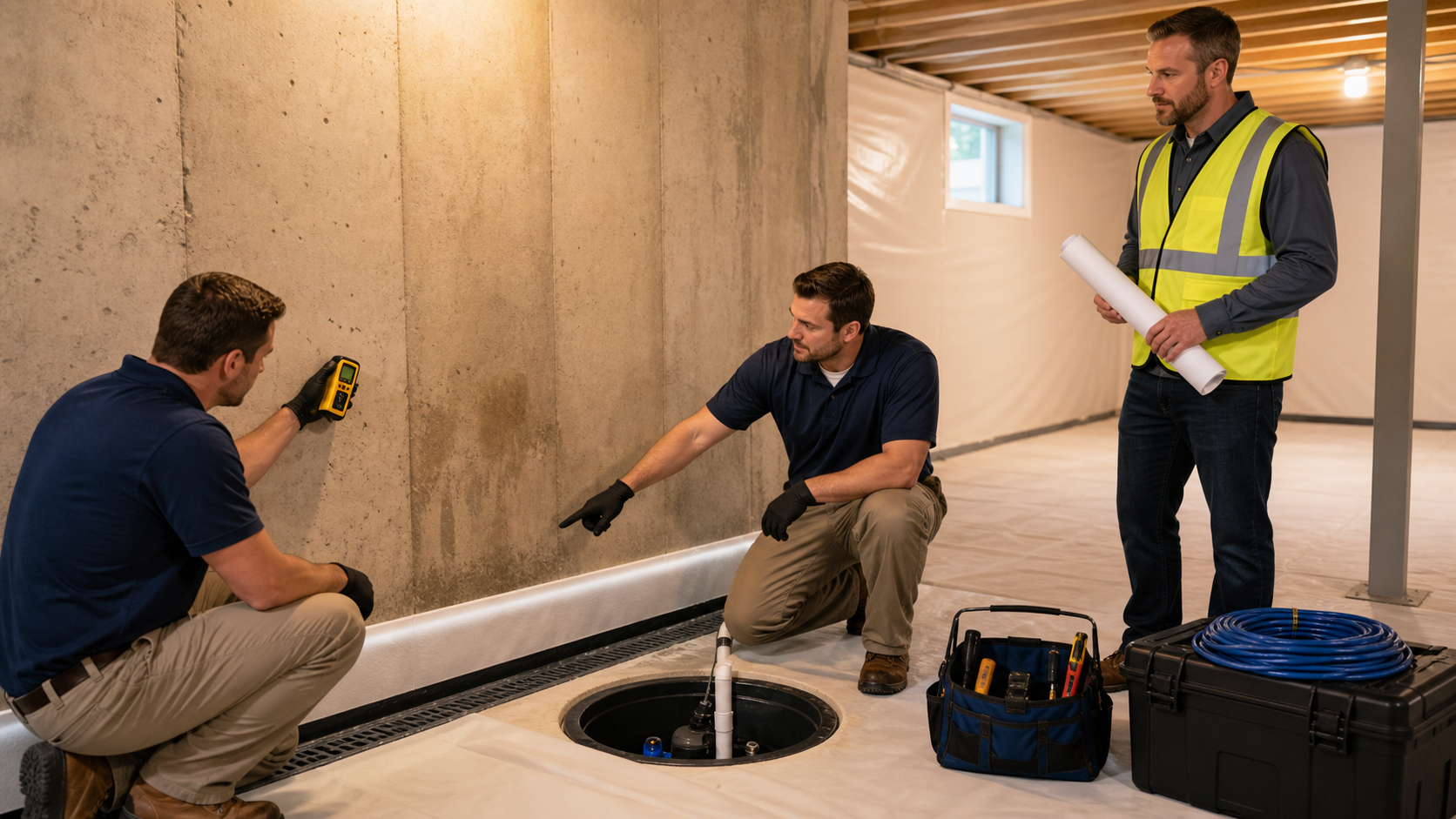
An experienced team will use moisture meters, flashlights, and even small cameras if needed to peek inside hidden places. Proper inspection is important so nothing is missed. They’ll trace back where the water is coming in and look at the bigger picture, not just what’s visible on the surface. Depending on what we find, the next steps might include sealing wall cracks, installing a drain system under the floor, or reworking the way water flows around your home. Sealing up wall cracks with waterproof material is a common fix, but sometimes a drain tile or sump pump needs to be put under the slab to catch water before it spreads. Every house is a little different, and the right fix depends on what’s going on under the surface. Sometimes regrading the soil outside or cleaning gutters is enough, but bigger problems may take extra parts or larger equipment.
Waterproofing might also involve checking window wells, repairing worn or broken pipes, or even swapping out old window seals. Trained professionals focus on making sure water can’t collect anywhere close to your basement walls or floor.
Questions to Ask Before You Schedule the Work
Before setting up the project, it helps to ask a few simple questions. These are things we talk through often with homeowners and commercial property managers alike. Understanding what will happen before, during, and after the project gives you a better idea of what to expect and helps you plan around the work.
- Are small repairs enough, or is a waterproofing system needed to handle long-term issues?
- How long will the work take, and will the space need time to dry afterward before you can use it again?
- Could this help with other signs like odor, humidity, or even how it feels upstairs during damp weather?
Don’t be afraid to ask how the repairs might change the look of your basement or if there will be noise or vibration from equipment. It’s best to know if pets or anyone sensitive to dust should be somewhere else while the work is done. Asking these questions up front makes the process smoother and avoids surprises halfway through. It also means you’ll know exactly how your space will be protected, cleaned, and finished when the job wraps up.
How Location and Soil Conditions Affect Water Problems
Not every basement has the same challenges. Where your property sits, the type of soil underneath, and even nearby structures all affect how water behaves. Sometimes the water doesn’t even come straight down from rain, it seeps from the sides as ground water rises during a wet spell.
- If your house stands on clay-heavy soil, that area tends to hold moisture closer to the foundation
- Older homes often have worn-out waterproofing or older build methods that don’t hold up like newer options do
- Landscaping, patios, and walking paths can shift water back toward the house if they’re graded wrong or settling over time
If drainpipes get blocked, water often pools beside foundation walls. In areas where it rains hard in spring, like West Central Illinois, Northeast Missouri, and Southeast Iowa, wet weather is a big concern. The heavy, water-logged earth puts pressure on your basement walls and tries to squeeze moisture inside. These conditions are especially common in areas like West Central Illinois, Northeast Missouri, and Southeast Iowa where the seasons shift fast and the soil stays heavy after a wet spring.
If your yard slopes toward your house or a neighbor puts in new landscaping, it can change the way water flows on your property. Even a sidewalk or bare patch of ground in the wrong spot may let extra water pool up near your basement.
Why Late Spring is the Best Time to Act
Late spring offers a window where the ground isn’t frozen but hasn’t fully dried out either. That makes now one of the best times to address basement moisture.
- Thawed ground means soil can be moved and settled properly if part of the fix is outside
- You get ahead of summer rain and storm season, which brings heavier and more frequent water issues
- It’s easier to book services before everyone else rushes to address damage in the middle of summer
As days get warmer, the ground thaws from the winter freeze, and puddles left behind by melting snow disappear. You also avoid a last-minute rush, many people wait until storms cause problems, and then services book up quickly. Acting now before soil hardens and summer heat dries things out makes certain jobs much easier. Acting early can mean being first in line and having less work to undo later if that first summer storm turns into a downpour.
Letting a small water issue go until peak storm season can make repairs much harder and more expensive later. Spring is the best time to take care of cracks, improve drainage, or have your basement looked at for trouble spots.
Protect What’s Below Before the Season Shifts
Basement waterproofing isn’t something most people think about until something goes wrong. But dampness, odor, and water marks are all early warnings. When those signs show up in spring, they’re giving you time to stop things from getting worse.
If you take care of the basement beneath your house or building, you’re protecting everything above it. Water seeps upward as well as through walls, so problems downstairs often lead to problems elsewhere. Getting ahead of water problems now means your foundation stays stronger, and you avoid emergency cleanup in the future. Spring moisture can also lead to damage you may only notice later, like peeling paint, warped floorboards, or even new cracks in upstairs walls. Keeping water out before it starts making its way in is always the best move.
Whether you’re maintaining a home or managing a larger space, this time of year is a smart moment to prepare the space that sits underneath everything else you count on. Taking just a little time to check for moisture or call in an expert can go a long way, once handled, you’ll know your basement is protected through any weather the season might bring.
Noticing damp walls or storm damage at your home or business can be worrying, especially during the wet months across West Central Illinois, Northeast Missouri, and Southeast Iowa. We know that small signs of moisture can quickly become bigger issues if left unchecked. Taking action before summer arrives is key to protecting your property. Discover how our approach to basement waterproofing can give you peace of mind. For personalized solutions and trusted results, reach out to King Waterproofing & Foundation Solutions today.