All foundations matter, but not every building is built the same. Whether it’s your home, a small shop, or a full-scale warehouse, the foundation beneath it plays a big role in keeping everything safe and stable. Still, the way we go about fixing issues can look very different from one type of structure to another.
This is where knowing the difference between commercial and residential foundation repair becomes important. Spring can bring extra attention to this, especially when cracks and shifts start showing after freezing and thawing all winter long. If you’re noticing new signs of movement or wear, it helps to understand what kind of repair process your property might need.
What Residential Repairs Usually Look Like
When we work on a home, we’re thinking about more than just holding up the weight of the house. We’re thinking about how that space feels and functions for the people living there. That means comfort, clean lines, and peace of mind.
Most residential jobs deal with smaller structures, single-family homes, garages, sheds, or small additions. Here are a few of the common problems we run into with homes:
- Wall cracks, especially near windows and doors
- Floors that feel uneven or have started to slope
- Doors and windows that stick or won’t latch easily
- Tilting chimneys or gaps around baseboards
When we look at these problems, we’re focused on how to stop the settling and help bring things back to normal. We also want to make sure water stays out and the house can handle the changing seasons without more damage.
How Commercial Projects Are Built Differently
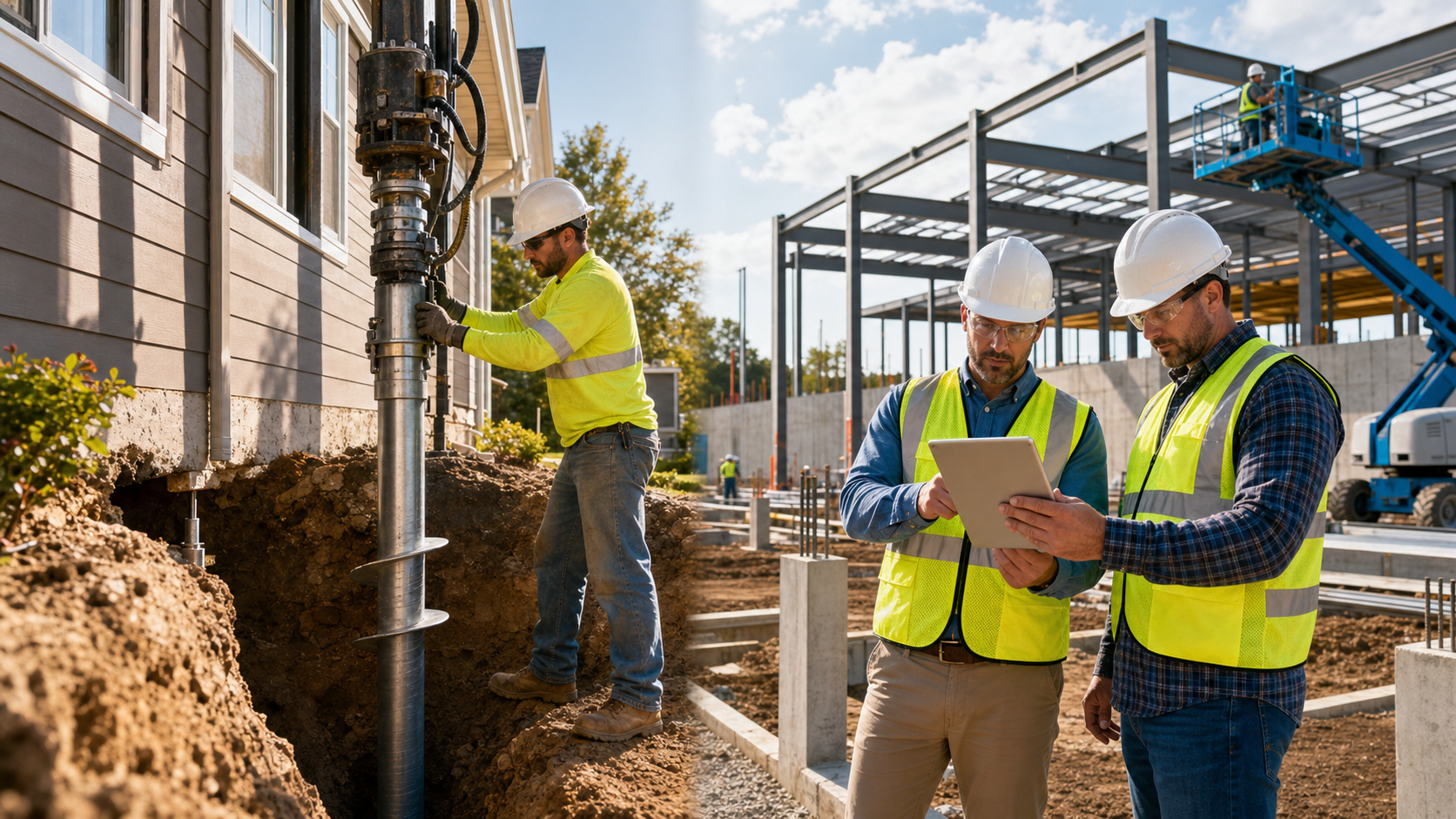
Foundations on bigger commercial jobs have heavier loads to carry. We’re talking about buildings designed for higher traffic, heavier equipment, and more pressure on the ground. These might include delivery trucks, large heating and cooling systems, or even small cranes.
Commercial buildings often use larger, deeper foundations with added reinforcements. The materials are usually heavier, and the work often needs to happen on a tighter timeline to avoid slowing business down. On top of that, commercial projects nearly always need sign-off from engineers along with city inspections and permits.
With all of this in play, commercial jobs tend to be more complex and involve more planning time. A repair here might affect part of a warehouse, a retail floor, or even the safety of a loading area. So every fix has to be durable and meet code while still being done as quickly and safely as possible.
Different Tools and Techniques for Each Job
Not all foundation problems require the same fix. Once we figure out what’s causing the issue, we look at the tools that make the most sense for the structure.
On residential projects, we often work with things like:
- Helical piers or push piers to stabilize sinking areas
- Wall anchors to correct bowing basement walls
- Sealants or coatings to block unwanted moisture
These methods are ideal for smaller foundations and can usually be installed with limited disruption to the living space.
For commercial properties, the picture changes quite a bit. Repairs might include:
- Soil testing to check what’s going on beneath large slabs
- Concrete reinforcement using heavy-duty materials
- Large equipment needed to reach deeper footing levels
It all comes down to how much weight the foundation must carry and how much movement the building can tolerate. Things that work for a home usually aren’t strong enough for a multi-unit commercial building or warehouse.
Why Diagnosing Issues Takes a Different Approach
When we check a foundation, the way we investigate depends a lot on what kind of structure we’re dealing with. Looking at a single-family basement is different from inspecting a factory floor.
In a home, we’re paying close attention to cracks, drafts, and how spaces feel to the people using them every day. The goals are warmth, comfort, and long-term value, especially for anyone planning to stay in the property. We might even notice issues during something as simple as carrying laundry or walking across a creaky floor.
On a commercial site, the focus shifts. We’re thinking about machines above the floor, employees walking across large areas, and the tools or storage sitting along the foundation. That means putting more eyes on weight limits, support beams, and stress points. On bigger jobs, we often work alongside engineers to decide which move makes the most sense based on safety codes and structural demands.
Residential foundation repair isn’t just a smaller version of industrial work. It’s a different process with a different goal. The scale, tools, and reasons to fix things all depend on who lives or works above the foundation itself.
The Benefits of Knowing the Difference
Understanding these differences helps property owners take earlier action when something seems off. Residential problems can start small, like a door that sticks, but still point to bigger issues. Commercial managers need to know when a visible crack or floor shift could lead to unsafe work zones or building code concerns.
King Waterproofing & Foundation Solutions uses proven systems including helical piers, wall anchors, and polyurethane injections to address a wide range of foundation repairs on both residential and commercial properties. For commercial sites with significant settling or movement, we provide deep pier stabilization and engineer-approved solutions to protect structural integrity over the long term.
Foundations can’t fix themselves. Spotting an issue in the spring before rain and flood season picks up can save time down the road. The earlier we catch something, the more likely it is the repair will be simpler and less disruptive. Knowing what type of structure you’re dealing with, and what kind of fix makes the most sense, is the first step in keeping it standing strong.
Sticking doors, cracked walls, or sinking floors could be signs of underlying foundation issues that need professional attention. We help homeowners throughout the Tri-State area by stabilizing and restoring their foundations using proven methods and advanced equipment. For trusted solutions in residential foundation repair, turn to King Waterproofing & Foundation Solutions. Call us today to schedule your inspection.